
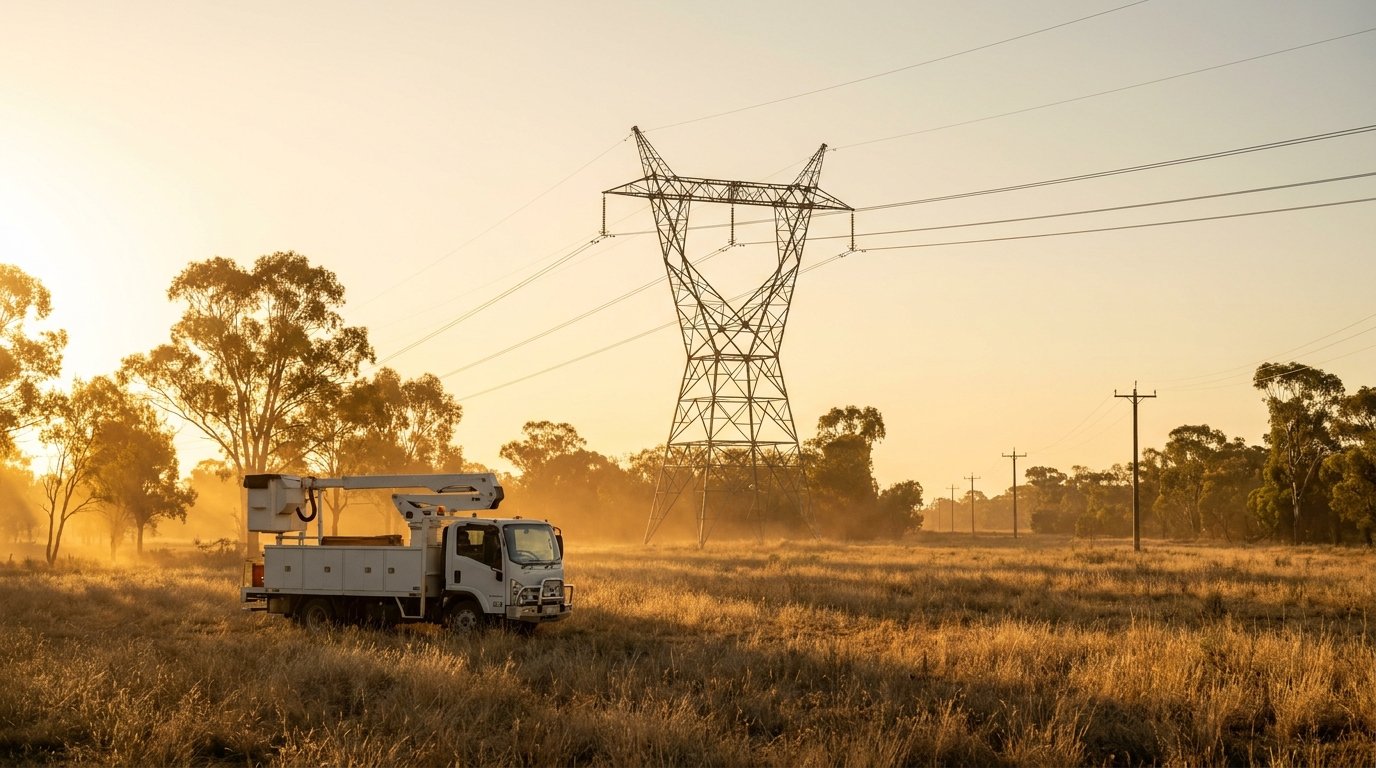
Utilities
Fleet telematics for utility crews. Wherever they have to go.
Distribution, water, gas, and telecoms operators in Australia and New Zealand. Real-time crew tracking, satellite-ready hardware for when the cellular network ends, lone-worker safety, depot reporting. Built for the realities of utility fleets in regional and remote country.
30 minutes, configured to your fleet. We respond within one business day.
- Direct-to-Cell satellite failover
- Duress pendant · up to 5 km
- EV + ICE on one dashboard
- Microsoft Entra ID SSO
Built for distance
Utility fleets routinely operate past the cellular network. TRACKbox 4 combines 4G LTE and Direct-to-Cell satellite connectivity in one device, ready to fail over automatically where the service is available. Direct-to-Cell is live in New Zealand and rolling out in Australia where supported by network availability and plan configuration, with Iridium satellite available for remote Australian coverage today, designed to reach the substations, water infrastructure, and remote telecom sites where standard fleet tracking goes blind.

Utilities
When the cellular grid ends, the fleet stays visible.
Satellite-ready failover
Built to keep telemetry running past cellular.
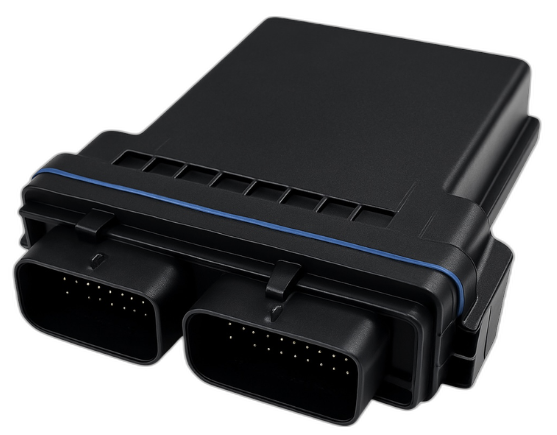
Connectivity layer
TRACKbox 4
The single biggest operational difference for utility fleets. Where standard fleet tracking goes blind past the cellular network, TRACKbox 4 is built to fail over to Direct-to-Cell satellite without manual intervention where the service is available - designed to keep your crews dispatched to remote substations, water infrastructure, or rural telecom sites visible to dispatch beyond cellular.
- 4G LTE primary
- Direct-to-Cell failover
- Live in NZ · rolling out in AU
- Iridium for remote AU today
Direct-to-Cell is live in New Zealand and rolling out in Australia where supported by network availability and plan configuration. Critical for distribution and water network fleets working past the cellular grid.
See the coverage story against your own network footprint - 30 minutes.
What utility fleets get from Sensium
What changes day-to-day for your crews.

Safety stack
- In-vehicle panic button on every TRACKbox 4. Back-to-base alert with vehicle location.
- LoRa driver pendant extends coverage to off-vehicle workers.
- Driver behaviour reporting - speed, harsh-braking, fatigue indicators.
- AI video review for incident detection and training feedback.
Lone-worker safety
Panic / duress, native, on every vehicle.
Your crews routinely work alone in the field. Sensium has a panic / duress button on the in-vehicle hardware that triggers a back-to-base alert. A LoRa-tethered driver pendant extends the safety net to off-vehicle workers - the crew member doing the actual work at the site, not just the driver in the cab.
Depot reporting
Crews. Trucks. Plant. One dashboard.
Your fleet is not homogeneous - it's light vehicles, plant, and equipment, often with mixed EV + ICE. Sensium Connect+ reports across your full asset mix on a single dashboard, with depot-level utilisation, cost-centre attribution, and the audit logs your procurement team expects.

Reporting coverage
- Light vehicles + plant + equipment
- Mixed EV + ICE on one dashboard
- Depot-level utilisation
- Cost-centre attribution
- Crew dispatch + ETA
- Procurement-grade audit logs
Frequently asked
Utility fleet questions.
Question 01
What does Sensium do for utility fleets?
Question 01
What does Sensium do for utility fleets?
Real-time vehicle tracking with one-second telemetry, satellite failover when crews go past the cellular network, dispatch and depot reporting, driver safety with panic / duress for lone-worker scenarios, and full mixed EV + ICE fleet management. Built for distribution, water, gas, and telecoms operators.
Question 02
Does Sensium support remote and rural utility coverage?
Question 02
Does Sensium support remote and rural utility coverage?
Yes. This is where TRACKbox 4 satellite-ready hardware comes into its own. When the cellular network drops out, the device is built to fail over to Direct-to-Cell satellite without manual intervention where the service is available. Direct-to-Cell is live in New Zealand and rolling out in Australia where supported by network availability and plan configuration, with Iridium satellite available for remote Australian coverage today. Critical for utility crews dispatched to remote substations, water infrastructure, or rural telecom sites.
Question 03
How does Sensium handle utility crew safety?
Question 03
How does Sensium handle utility crew safety?
Lone-worker panic / duress is a native module: every TRACKbox has a hardware button that triggers a back-to-base alert. A LoRa-tethered driver pendant extends the safety net to off-vehicle workers (crew at the work site, not just in the cab).
Question 04
Can the platform handle mixed light + heavy utility fleets?
Question 04
Can the platform handle mixed light + heavy utility fleets?
Yes for tracking, telemetry, video, and dispatch. For NHVR Electronic Work Diary heavy-vehicle compliance, Sensium is not currently TCA-certified. Most light-utility and rural-utility fleets do not require TCA EWD; if your operation depends on it, talk to us about how Sensium integrates with EWD-certified providers.
Question 05
Can Sensium manage a mixed EV and ICE utility fleet on one platform?
Question 05
Can Sensium manage a mixed EV and ICE utility fleet on one platform?
Yes. Sensium Connect+ reports across electric and internal-combustion vehicles on a single dashboard, including EV state of charge alongside conventional fuel and utilisation data. The EV fleet does not have to live on a separate system as utilities transition.
Question 06
How far from the vehicle does the lone-worker duress pendant reach?
Question 06
How far from the vehicle does the lone-worker duress pendant reach?
The LoRa-tethered duress pendant works up to around five kilometres from the TRACKbox-equipped vehicle. That covers the typical case for utility crews - the worker doing the job at a substation, pit, or pole some distance from where the truck is parked - not just the driver in the cab.
Question 07
Can Sensium track non-powered utility assets such as generators and trailers?
Question 07
Can Sensium track non-powered utility assets such as generators and trailers?
Yes. The sealed, battery-powered TB3 is built for assets without a 12V supply - generators, trailers, light towers, and towed plant - and reports into the same Sensium Connect+ dashboard as the in-vehicle units, so powered and non-powered assets appear in one view.
Question 08
Does Sensium support single sign-on and role-based access for utility IT teams?
Question 08
Does Sensium support single sign-on and role-based access for utility IT teams?
Yes. Connect+ supports single sign-on via Microsoft Entra ID, role-based access control, and audit logs. That lets a utility manage user access through its existing identity provider and keep a clear record of who can see and do what.
Question 09
Can geofences and entry / exit alerts be set around substations and depots?
Question 09
Can geofences and entry / exit alerts be set around substations and depots?
Yes. Connect+ supports geofencing with entry and exit alerts, so a crew arriving at or leaving a substation, depot, or worksite is flagged. Combined with live mapping and trip history, it gives dispatch a clear picture of where crews are and where they have been.
Question 10
How long does Sensium hardware last in field-deployed utility fleets?
Question 10
How long does Sensium hardware last in field-deployed utility fleets?
TRACKbox hardware is designed for ten-plus year deployment, carries a three-year warranty, and is RCM certified, with some units still in service after seventeen years. For utility fleets that keep vehicles and plant for long lifecycles, hardware that outlasts the vehicle improves the total cost of ownership.
Talk to Sensium
Show us your distribution map. We'll show you the coverage.
Sensium runs across utility fleets in Australia and New Zealand right now. Whether you're starting fresh or transitioning out of an existing contract, we'll walk through the picture.