
Industries
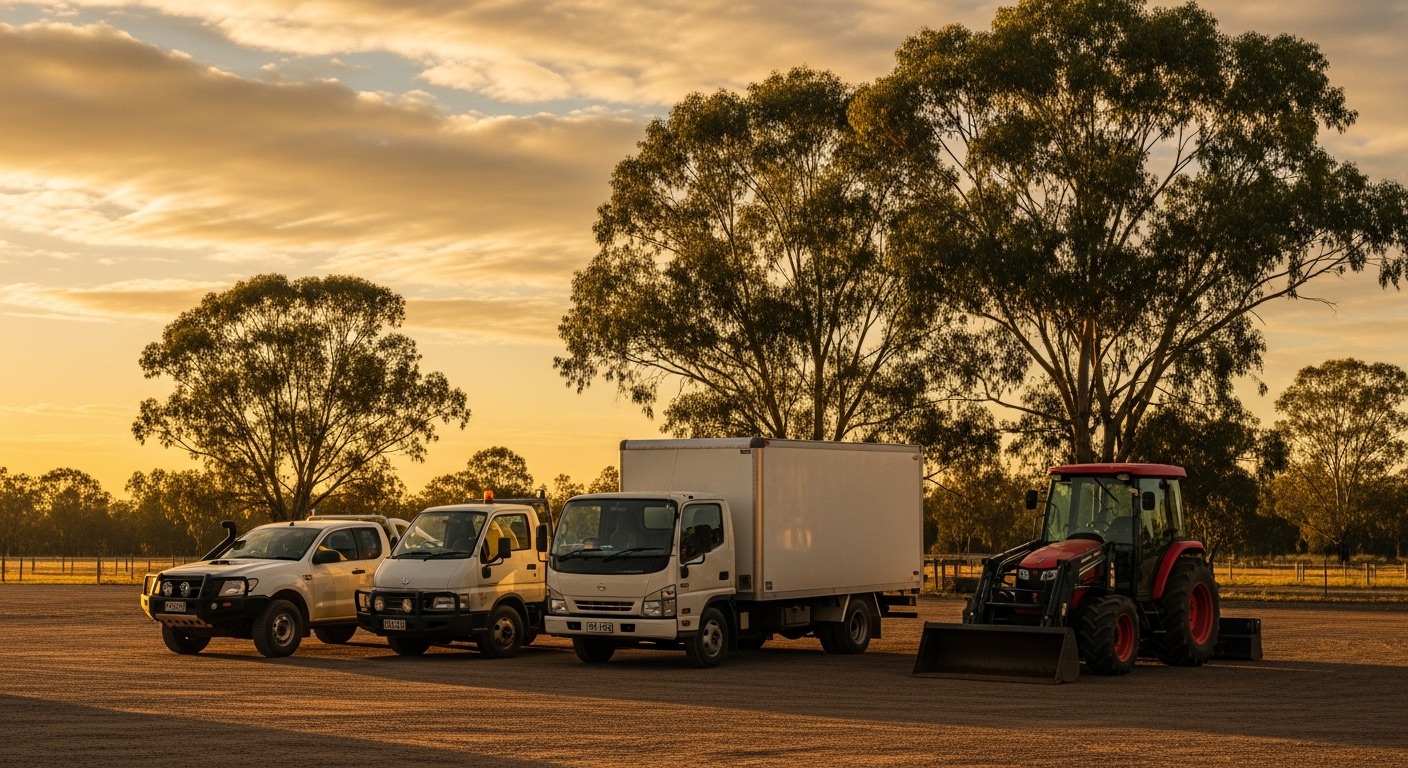
Built for the fleets that run Australia and New Zealand.
One platform, seven industries. Local councils, state and federal government, utilities, mining, agriculture, logistics, and universities. The underlying technology is the same; the configuration adapts to each industry's fleet mix, compliance, reporting, and connectivity.
30 minutes, configured to your fleet. We respond within one business day.
- Seven industries · one platform
- Thousands of vehicles · AU + NZ
- Built locally
- LGP Fleet Management panel
Trusted across Australasian fleets
Trusted across thousands of vehicles in Australia and New Zealand: council, government, utility, mining, agriculture, and logistics fleets. Built locally, designed for the regional realities of distance, connectivity, and compliance.
Every fleet
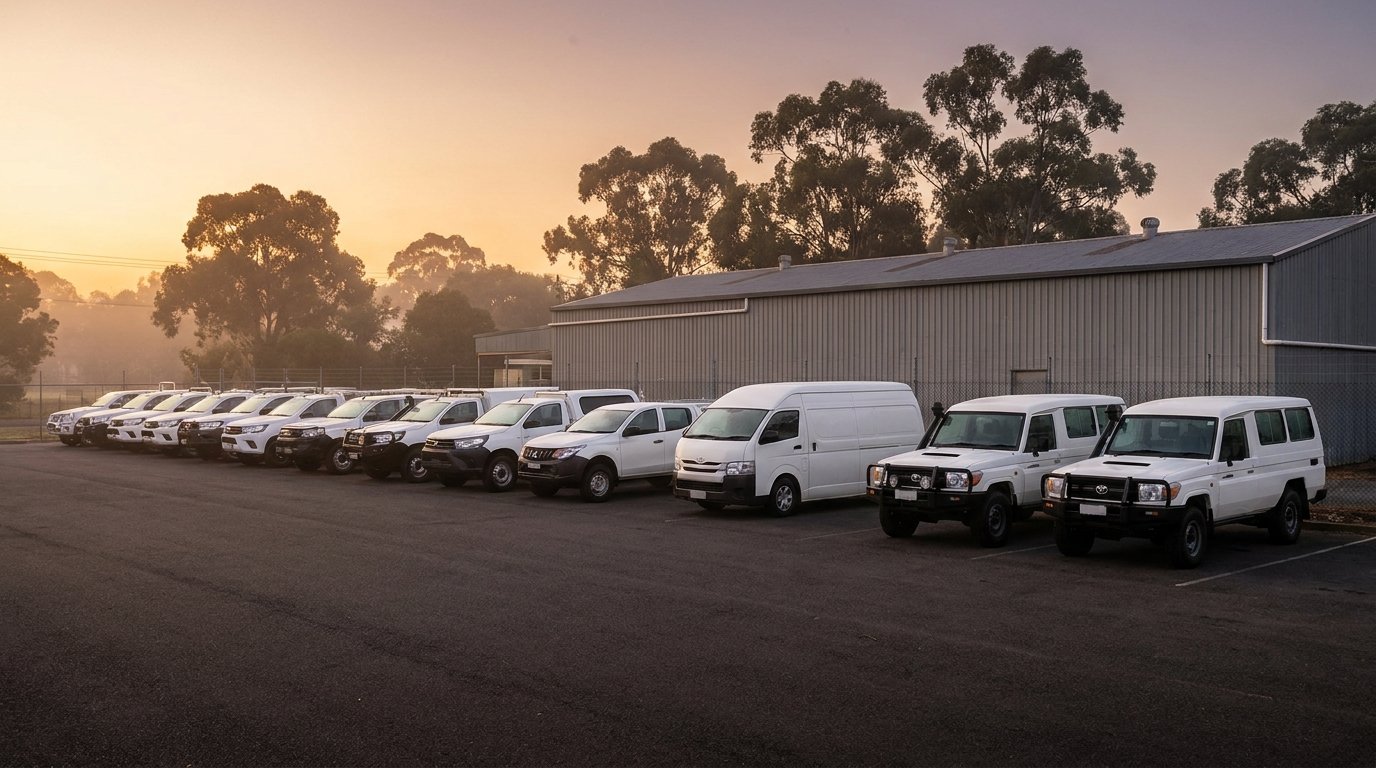
One platform. Every fleet that keeps Australia and New Zealand running.
Seven industries · one platform
Pick the one closest to your operation.
Local Government & Councils
Cost-centre reporting, pool car management, mixed electric and diesel fleets, lone-worker safety. Built around shared vehicles, departmental reporting, and driver safety.
State & Federal Government
Multi-agency fleets across state and federal departments. Data sovereignty, procurement-grade reporting, audit logs.
Utilities
Distribution, water, gas, telecoms. Crew dispatch, depot reporting, satellite-ready hardware for past the cellular grid.
Mining
Site fleets, haul operations, dragline trucks. 1-second telemetry, ruggedised hardware, custom firmware where it matters.
Agriculture
Harvest fleets, plant and equipment, rural runs. Direct-to-Cell satellite ready, 10+ year hardware lifetimes, in-region data.
Logistics & Transport
Distribution, last-mile, regional freight. True Path one-second telemetry, route replay, full mixed-fleet visibility.
Universities & Tertiary Education
Pool vehicle booking across campuses and departments. Booking permissions, approval rules, cost-centre reporting, key cabinets and vehicle access.
Not sure where your fleet fits? We'll map your fleet in one call - 30 minutes.
Not sure which fits?
Most fleets sit across two or three industries.
Council fleets straddle utilities (parks, road maintenance) and logistics (community transport, waste). Mining operations have both heavy-vehicle and light-vehicle profiles. Agricultural fleets often include logistics components. The platform handles cross-vertical configuration on a single tenancy - talk to us about how your operation maps.
Frequently asked
Industry-level questions.
Cross-industry answers first, then industry-specific questions grouped in the same order as the tiles above. For a deeper look at any industry, follow its tile link.
Question 01
Which industries does Sensium serve?
Question 01
Which industries does Sensium serve?
Sensium serves local councils, state and federal government agencies, utilities, mining, agriculture, logistics and university fleets across Australia and New Zealand. The platform underneath is the same across all seven - what changes is configuration: cost-centre structures, reporting formats, fleet mix, satellite vs cellular bias, and module priorities.
Question 02
Is Sensium designed for any one industry first?
Question 02
Is Sensium designed for any one industry first?
Yes - local government and councils are our primary focus. We built the multi-tenancy, cost-centre awareness, and cross-department permissions specifically for the council org chart. The platform extends naturally to other industries because the underlying architecture (cost centres, mixed fleets, role-based access) generalises.
Question 03
Can the platform handle mixed EV + ICE fleets?
Question 03
Can the platform handle mixed EV + ICE fleets?
Yes. EV state-of-charge, depot charging status, and ICE telematics live on a single dashboard. The platform does not require separating EV and ICE into different products or contracts. Particularly relevant for council and utility fleets transitioning to EV in stages.
Question 04
Does Sensium handle heavy vehicles?
Question 04
Does Sensium handle heavy vehicles?
Yes for tracking, telemetry, video, and remote access. We are not currently TCA-certified for NHVR Electronic Work Diary, so for heavy-vehicle EWD compliance specifically, other providers may be more directly suited. Most council, utility, agriculture, and logistics fleets do not require TCA-certified EWD.
Question 05
What is the typical implementation timeframe?
Question 05
What is the typical implementation timeframe?
For a fleet of 20-200 vehicles, typical implementations run six to twelve weeks. Hardware install schedule (TRACKbox 4 per vehicle) is the longest-lead line item. Software configuration runs in parallel. Larger or multi-region deployments stage over multiple quarters.
Question 06
What makes the council version of Sensium different?
Question 06
What makes the council version of Sensium different?
Sensium designs for the way councils run from the start - cost centres, multi-department pool fleets, electric and diesel vehicles side by side, and assets that have to last. Multi-tenancy, cross-department permissions, and cost-centre-aware reporting were built for councils first. Australian-made TRACKbox hardware with firmware written in-house means custom council requirements, like the 115 km/h speed buzzer that was live four days after it was asked for, can be built by the same team.
Question 07
Is Sensium on the LGP procurement panel?
Question 07
Is Sensium on the LGP procurement panel?
Yes. Sensium is listed on the Local Government Procurement (LGP) Fleet Management Services panel in Australia — the procurement shortcut for AU councils. For other state and federal procurement panels, we engage on a per-RFQ basis.
Question 08
Can councils share vehicles between departments?
Question 08
Can councils share vehicles between departments?
Yes. Cross-department vehicle sharing is operationally feasible today with multi-tenancy permissions, RFID handover, and pool-booking software. The platform supports cost-centre-aware booking so a vehicle used by Parks on Monday and Planning on Tuesday is correctly billed back to each department.
Question 09
Is Sensium suitable for federal department fleets?
Question 09
Is Sensium suitable for federal department fleets?
Yes. The multi-agency tenancy model, cost-centre awareness, and audit-grade reporting that work for council fleets scale to state and federal department fleets. The architecture supports multi-region deployments across state lines without splitting tenancies, and Australian customer data stays on Australian servers.
Question 10
How does Sensium handle ISM-aligned and ASD Essential Eight controls?
Question 10
How does Sensium handle ISM-aligned and ASD Essential Eight controls?
Sensium engages with federal procurement teams on specific security clearance requirements as part of the RFQ process. The architecture is designed to satisfy ISM-aligned controls and ASD Essential Eight without retrofitting — Australian-Made certified hardware, Australian data residency, encrypted in transit and at rest, role-based access, and audit logs. Talk to us about your specific framework and we will walk through the controls mapping.
Question 11
Does Sensium work past cellular coverage for utility crews?
Question 11
Does Sensium work past cellular coverage for utility crews?
Yes. TRACKbox 4 combines 4G LTE and Direct-to-Cell satellite connectivity in one device, ready to fail over automatically where the service is available. Direct-to-Cell is live in New Zealand and rolling out in Australia where supported by network availability and plan configuration, with Iridium satellite available for remote Australian coverage today. The result is telemetry that continues past the cellular network without manual intervention, for crews dispatched to remote substations, water infrastructure, or rural telecom sites where standard fleet tracking goes blind.
Question 12
Can Sensium track utility trailers and non-powered assets?
Question 12
Can Sensium track utility trailers and non-powered assets?
Yes. TRACKbox TB3 is a sealed, battery-powered tracker designed for non-powered assets — trailers, generators, water carts, light towers, towed plant. Self-contained and sealed for outdoor exposure, it reports into the same Sensium Connect+ dashboard as the powered TB2 fleet.
Question 13
Does Sensium support crew dispatch and depot reporting?
Question 13
Does Sensium support crew dispatch and depot reporting?
Yes. Sensium Connect+ reports across light vehicles, plant, and equipment on one dashboard, with crew dispatch and ETA, depot-level utilisation, cost-centre attribution, and the audit logs procurement teams expect. Mixed EV and ICE roll up into the same view.
Question 14
Is Sensium hardware ruggedised enough for mining operations?
Question 14
Is Sensium hardware ruggedised enough for mining operations?
Yes. TRACKbox is Australian-Made certified hardware designed for site conditions and 10+ year deployment — some devices are still in service after seventeen years. The hardware is engineered for the dust, heat, vibration, and weather of Australian and New Zealand sites, not retrofitted from urban-fleet products.
Question 15
Does Sensium support site-specific custom firmware for mining?
Question 15
Does Sensium support site-specific custom firmware for mining?
Yes. Because Sensium designs the TRACKbox in Australia and writes the firmware in-house, mining-specific compliance is built in-house: geofence-enforced site speed limits, mine-area entry/exit logging, two-way radio integration triggers, hazard zone proximity alerts, and custom telemetry rates for haul cycles. The 115 km/h speed buzzer that shipped in four days is the proof point.
Question 16
Can Sensium handle haul trucks alongside light vehicles?
Question 16
Can Sensium handle haul trucks alongside light vehicles?
Yes for tracking, telemetry, video, and remote access on haul trucks, dragline trucks, and the wider site fleet — all alongside light vehicles on the same Connect+ dashboard. One-second True Path telemetry captures haul cycles at sub-minute granularity for accurate cycle-time analysis. For on-road NHVR Electronic Work Diary compliance specifically, Sensium is not currently TCA-certified; most on-site mining operations do not require it.
Question 17
Does Sensium track agricultural plant, tractors, and implements?
Question 17
Does Sensium track agricultural plant, tractors, and implements?
Yes. TRACKbox TB2 covers powered fleet — tractors, harvesters, utes, trucks — with one-second telemetry. TRACKbox TB3 covers non-powered implements, towed plant, and equipment with a sealed, battery-powered, self-contained tracker. Both report into the same Sensium Connect+ dashboard.
Question 18
Will Sensium work on rural properties past cellular reception?
Question 18
Will Sensium work on rural properties past cellular reception?
Yes. This is where TRACKbox 4 satellite-ready hardware matters most. When the harvest is in a paddock past the nearest tower, the device is built to fail over to Direct-to-Cell satellite automatically where the service is available, designed to keep telemetry running through the harvest window beyond the cellular network. Direct-to-Cell is live in New Zealand and rolling out in Australia where supported by network availability and plan configuration, with Iridium satellite available for remote Australian coverage today. No driver action required.
Question 19
Can Sensium track irrigation pumps and non-powered farm equipment?
Question 19
Can Sensium track irrigation pumps and non-powered farm equipment?
Yes. TRACKbox TB3 is designed for exactly this — sealed, battery-powered, self-contained, with no 12V supply required. It is built to outlive ten years of dust, heat, vibration, and weather in Australian conditions, on assets ranging from trailers and generators through to pumps and deployable equipment.
Question 20
What is True Path and why does it matter for logistics?
Question 20
What is True Path and why does it matter for logistics?
True Path is Sensium-proprietary one-second telemetry — the path the vehicle actually took, not where it appeared to be at two-minute samples. For distribution and last-mile, that resolution difference (120x improvement over typical two-minute polling) shows up in arrival accuracy, delivery proof, billing precision, and dispute resolution.
Question 21
Can Sensium handle distribution, last-mile, and regional freight on one platform?
Question 21
Can Sensium handle distribution, last-mile, and regional freight on one platform?
Yes. The same Sensium Connect+ tenancy reports across distribution, last-mile, and regional freight operations — per-vehicle utilisation, idle time, fuel and EV state of charge, arrival accuracy by route, driver behaviour by depot, and mixed EV and ICE roll-up. Built for the realities of Australian and New Zealand logistics fleets.
Question 22
How does Sensium AI video help with liability defence?
Question 22
How does Sensium AI video help with liability defence?
AI video telematics on Sensium provides up to a six-camera array per vehicle, driver-facing optional, automatic incident detection, and chain-of-custody clip retention. For incident review, training feedback, and the rare formal liability investigation, the footage is there when it matters — held to procurement-grade evidentiary standards.
Talk to Sensium
One platform across your fleet, however it's split.
Sensium runs across single-industry and cross-industry fleets in Australia and New Zealand. Show us your fleet profile and we will walk you through which configuration fits.