
Hardware · TRACKbox 4
Cellular, satellite, and LoRa in one device.
TRACKbox 4 is Sensium's latest tracking device, built for fleets that operate beyond mobile coverage: cellular, Direct-to-Cell satellite where the service is available, and LoRa for accessories, in one unit designed and manufactured in Australia.
30 minutes, on your coverage map and vehicle mix. We respond within one business day.

Australian-Made certified
Australian Made on TRACKbox means hardware designed and manufactured in Australia by Sensium, with custom firmware written in-house and local supply for procurement teams that need it.
What makes TRACKbox 4 different
Four design decisions in the hardware.
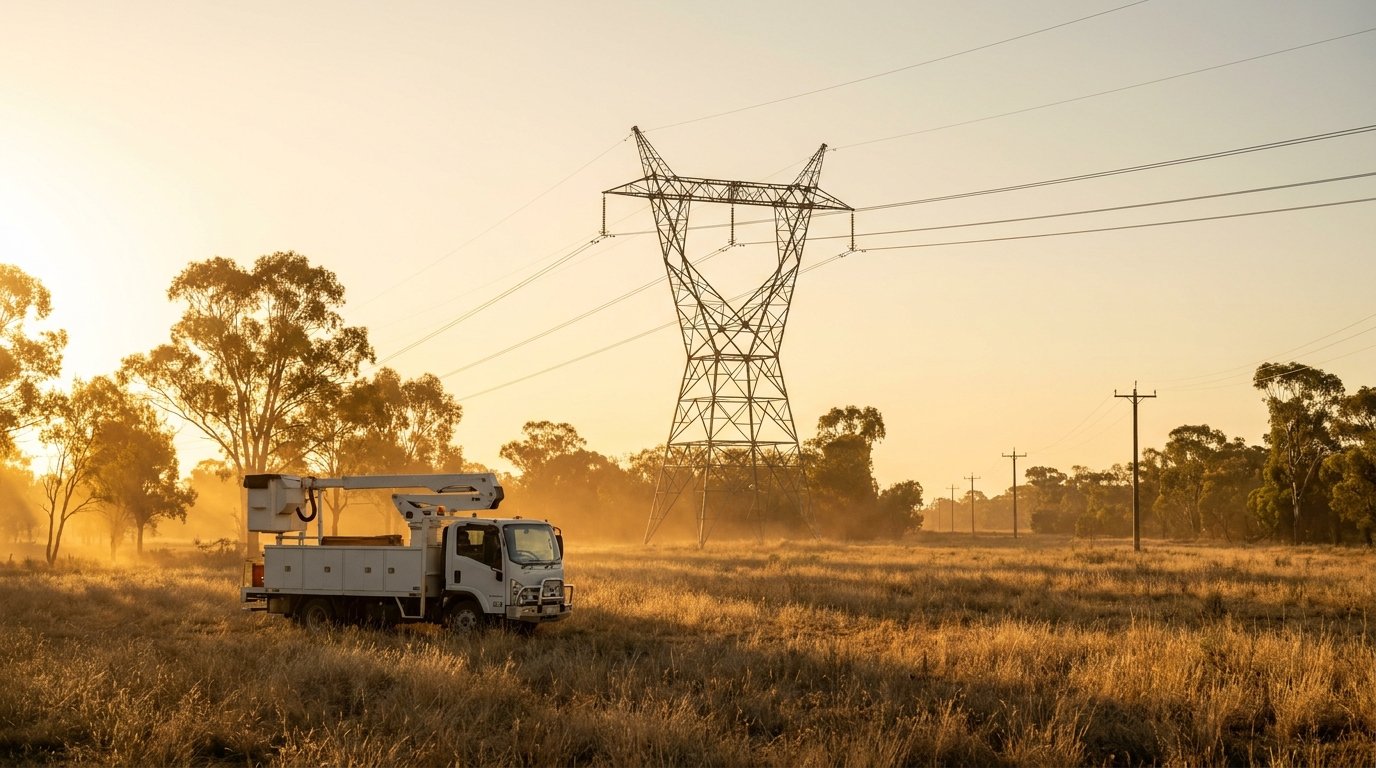
Cellular, satellite, LoRa
Cellular, satellite, and LoRa in one device.
Custom firmware written in-house. Field-recoded boxes still running after seventeen years.
Jeremy McLean
Founder, Sensium
01
Cellular + satellite + LoRa
One device. Three connectivity layers.
TRACKbox 4 has 4G LTE, Direct-to-Cell satellite, and Sense Network (LoRa) radios in the same unit, with three dedicated antenna pins on the top edge. The cellular network is the primary path; when it drops out, the device fails over to satellite automatically. LoRa handles short-range accessory traffic (panic pendants, asset tags). No driver action required. For fleets that work beyond mobile coverage, this is the capability that matters most.
- Primary · 4G LTE
- Failover · Direct-to-Cell satellite
- Accessory · LoRa (Sense Network)
02
True Path telemetry
1-second polling. Not every 2 minutes.
Most fleet GPS units poll vehicle position every two minutes. TRACKbox 4 records position every second via True Path. The difference shows up in route replay accuracy, geofence precision, arrival / departure event timing, and the resolution of your cost-centre utilisation reports.
1s resolution · 120× more granular than the 2-minute standard
03
10+ year lifetime
The box outlasts the vehicle.
Most fleet GPS hardware is designed on a 3-year replacement cycle - vendors prefer the recurring hardware revenue. TRACKbox is built for 10+ year deployment. Some original units are still in service after 17 years. This is a deliberate engineering choice: the hardware longevity is the single biggest input into council and government total cost of ownership.
17 yr · longest reported deployment still in service
04
Custom firmware
Custom firmware, written in-house.
Because Sensium owns the firmware end-to-end, customer-specific or industry-specific requirements are developed in-house. The 115 km/h speed buzzer that arrived in four days for one council customer is the canonical example - but the same path applies to geofence triggers, hazard zone alerts, site-specific compliance, and integration with two-way radio or back-to-base infrastructure.
Reseller path through the OEM: typically 6+ weeks, if accepted at all
Engineered detail
The interfaces matter.
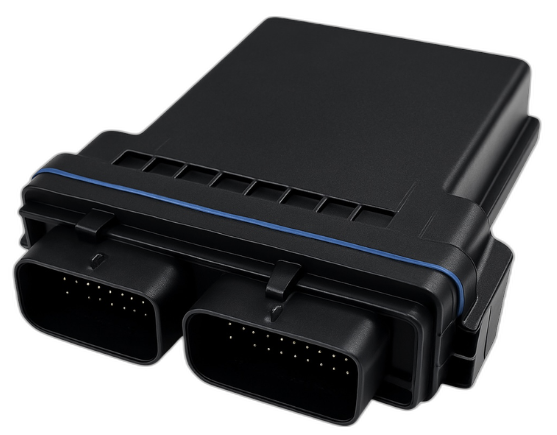
The antenna mounts and the automotive connectors are where the hardware engineering shows up. Three RF chains driven through three dedicated SMA pins. Two keyed automotive connectors on the underside - power, ground, CAN bus, accessory inputs - sealed against vibration and weather.

Antenna stack
Three SMA antenna pins. 4G LTE cellular, Direct-to-Cell satellite, and Sense Network LoRa each driven through a dedicated RF chain. Each pin is independently serviceable.

Automotive connectors
Two sealed automotive connectors on the underside. Power, ground, CAN bus, ignition, accessory inputs. Keyed to prevent miswiring. Sealed against vibration, moisture, and dust.
We'll walk through the full specification against your coverage map.
Book a hardware walkthroughFrequently asked
TRACKbox 4 questions.
Question 01
What is TRACKbox 4?
Question 01
What is TRACKbox 4?
TRACKbox 4 is Sensium's next-generation telematics platform, designed for fleets operating beyond traditional connectivity boundaries. It combines 4G LTE cellular, Direct-to-Cell satellite failover, and Sense Network (LoRa) in a single device, with True Path one-second telemetry and a 10+ year typical deployment lifetime. Designed and manufactured in Australia.
Question 02
How is TB4 different from TB2?
Question 02
How is TB4 different from TB2?
TB2 is the hard-wired cellular workhorse — the right choice for the bulk of a vehicle fleet operating inside the cellular grid. TB4 is the next-generation unit for fleets that operate past cellular coverage (utility crews, mining, agriculture, rural government). Both run the same firmware and report into the same Sensium Connect+ dashboard, so a mixed-TB2/TB4 fleet operates as one fleet.
Question 03
Does TB4 really have satellite?
Question 03
Does TB4 really have satellite?
Yes. TB4 includes Direct-to-Cell satellite connectivity alongside 4G LTE cellular. When the cellular network drops out, the device fails over to satellite automatically. No driver action required. This is the capability utility, mining, and agriculture fleets working beyond mobile coverage ask about first.
Question 04
How does custom firmware work?
Question 04
How does custom firmware work?
Because Sensium owns the firmware end-to-end, custom feature requests are developed in-house rather than routed through the overseas OEM process typical of reseller telematics. The classic example: a customer requested a 115 km/h speed buzzer, we shipped it in four days. Custom geofence triggers, integration with site systems, hazard zone alerts, and similar requests follow the same path.
Question 05
How long do TB4 units last?
Question 05
How long do TB4 units last?
Designed for 10+ year deployment. Some original Sensium units are still in service after seventeen years. The hardware is designed to outlast the typical vehicle lifecycle, which improves total cost of ownership materially compared to providers running three-year hardware churn cycles.
Question 06
When does TB4 satellite actually engage?
Question 06
When does TB4 satellite actually engage?
TB4 runs 4G LTE cellular as the primary path. When the cellular network drops out - past the nearest tower, in remote agricultural country, on a rural council road, or at a mine site - the device fails over to satellite automatically, with no driver action required. Iridium satellite is available in Australia today, and Direct-to-Cell (Starlink) is live in New Zealand and rolling out in Australia subject to local carrier availability.
Question 07
What network does TB4 use for cellular connectivity?
Question 07
What network does TB4 use for cellular connectivity?
TB4 connects over 4G LTE using enterprise-grade M2M connectivity on the Telstra network, with a store-and-forward design: if connectivity drops, the device records data locally and uploads the backlog when it reconnects. The unit uses a physical M2M SIM. Sensium bundles the connectivity, so it is not a separate line item customers manage.
Question 08
What warranty and backup power does TB4 include?
Question 08
What warranty and backup power does TB4 include?
TB4 carries a 3-year manufacturer's warranty and is designed for 10+ year deployment. An internal backup battery keeps the unit reporting for roughly 10 hours after a loss of vehicle power, so a disconnected battery or attempted theft still reports position and status rather than going dark.
Question 09
How accurate is the location data from TB4?
Question 09
How accurate is the location data from TB4?
TB4 uses multi-constellation GNSS, which typically delivers GPS accuracy within around 10 metres. Combined with True Path one-second telemetry, the result is route replay, geofence entry and exit timing, and arrival and departure events that reflect what the vehicle actually did rather than a sampled approximation.
Question 10
Is TB4 suitable for non-powered assets like trailers?
Question 10
Is TB4 suitable for non-powered assets like trailers?
No - TB4 is a powered, hard-wired in-vehicle unit aimed at fleets operating past the cellular grid. For non-powered assets such as trailers, skid bins, generators, and towed plant, the sealed battery-powered TB3 is the right device. Both report into the same Sensium Connect+ dashboard, so a mixed fleet is still managed as one fleet.
Talk to Sensium
See TB4 deployed.
We'll walk through your vehicle mix, coverage map, and any custom requirements, and show what TRACKbox 4 looks like in your operation.